Hold'em Math Every Singapore Poker Player Should Know
Hold'em Math Every Singapore Poker Player Should Know When I moderate the community chat, the questions that come up most often from Singapore players fall into two groups. The first is game selection...
Hold'em Math Every Singapore Poker Player Should Know
When I moderate the community chat, the questions that come up most often from Singapore players fall into two groups. The first is game selection: which provider, which bet size, which live dealer table. The second is the math underneath it — and that second group is where I can tell who's been playing for a while and who's just starting to take poker seriously. The players who understand the numbers make better decisions across every game on the floor. That's not a metaphor; it's a documented pattern in how experienced Singapore online casino players manage their money.
MBA66 runs a full poker room alongside its live dealer casino and slot library. For players in the SGD market who want to understand Hold'em mechanics at the level that actually changes outcomes, this is the breakdown that fills in the gaps most guides skip.
Photo by Pixabay on Pexels
Hand Rankings: What the Numbers Say
Every poker decision flows from one source: the hand ranking chart. Before any bet, before any check-raise, before any fold-on-the-river, you need this table internalised. The odds of making each hand are drawn from standard Hold'em probability math — the numbers don't lie, and they don't care about your losing streak.
A Royal Flush (A-K-Q-J-10, same suit) is the highest hand. Odds of being dealt one from a fresh 52-card deck: roughly 1 in 649,740. It is effectively a theoretical hand. You will see one at the table once every few years of regular play.
A Straight Flush (five consecutive cards, same suit, below ace-high) comes in at roughly 1 in 72,193. Four of a Kind (quads — all four suits of one rank) sits at about 1 in 4,165. A Full House (three of a kind plus a pair) occurs at roughly 1 in 693. These three sit at the top of the chart and represent the hands worth building a betting strategy around.
A Flush (five cards the same suit, not consecutive) lands at approximately 1 in 509. A Straight (five consecutive cards, mixed suits) hits at roughly 1 in 255. Three of a Kind comes in at about 1 in 47. Two Pair at approximately 1 in 21. One Pair at roughly 1 in 2.4 — it is the most common winning hand at most Singapore Hold'em tables.
High Card is a nothing-hand; it wins only when no other player paired anything. At showdown, a High Card Ace beats a High Card King, and so on down the line.
Two rules trip up players who think they know the rankings. First, the Ace plays both high and low in straights — A-K-Q-J-10 is the Broadway straight, 5-4-3-2-A is the wheel. Second, when two players hold the same rank of hand — both flushes, both straights, both two pairs — the higher kicker wins. That fifth card matters. A pair of Kings with an Ace kicker beats a pair of Kings with a Queen kicker, every time.
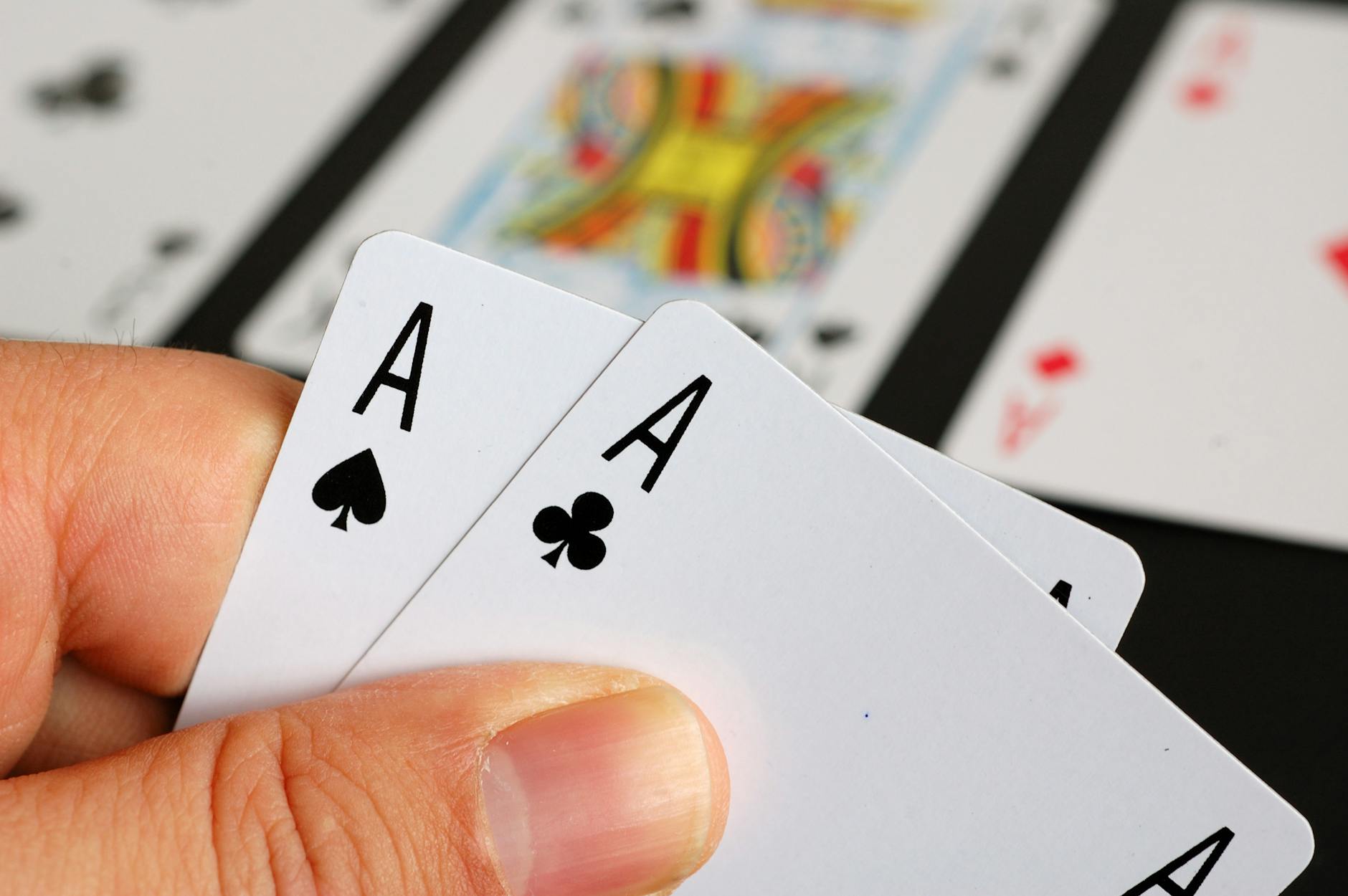
Photo by Joe Ng on Pexels
How a Hand Actually Unfolds: Four Betting Rounds
Knowing the rankings is step one. Knowing what happens between deal and showdown is where the game lives.
Each Hold'em hand opens with the dealer button rotating one seat clockwise. The two players left of the button post the forced blinds: small blind (roughly half the big blind) and big blind (the table's stake unit). All other players have the option to fold, call the big blind, or raise.
Pre-flop action runs clockwise from the player left of the big blind. A standard raise is 2-4x the big blind; a re-raise (3-bet) communicates a strong hand. Calling is never just "passive" — it is an active decision based on your hand's equity against your opponent's range.
Once all players have either folded or called the current bet, the flop arrives: three community cards dealt face-up simultaneously. This is the first major decision point. You are now playing a five-card hand. You can check, bet, or raise.
After the flop, the turn card is dealt — a single community card that changes the board state completely. A straight draw that missed on the flop now has one card left. Your hand either improved or it didn't.
The river is the final community card. After this, there are no more cards coming. Betting on the river with a strong hand means value-betting — charging your opponent to see the showdown. Bluffing on the river is high-risk because your opponent knows no card is coming to save them.

Photo by Pavel Danilyuk on Pexels
Position: The Hidden Edge
Position is the single most important strategic variable in Hold'em — more consistent than hand strength, more actionable than reading tells.
The button is the dealer position. The small blind and big blind are the weakest positions because they act earliest on every street post-flop. Middle position players act with moderate information. Late position players see the entire table before they act.
Acting last is a mathematical edge. Every bet your opponents make gives you information. You fold more cheaply in early position when you suspect strength; you extract more value in late position when you confirm weakness.
For Singapore players playing Hold'em at MBA66, observing table dynamics from late position is where the data comes from. The live dealer poker tables let you watch opponents across dozens of hands before you commit chips. That positional patience is what separates winning players from break-even players over a 30-day sample.
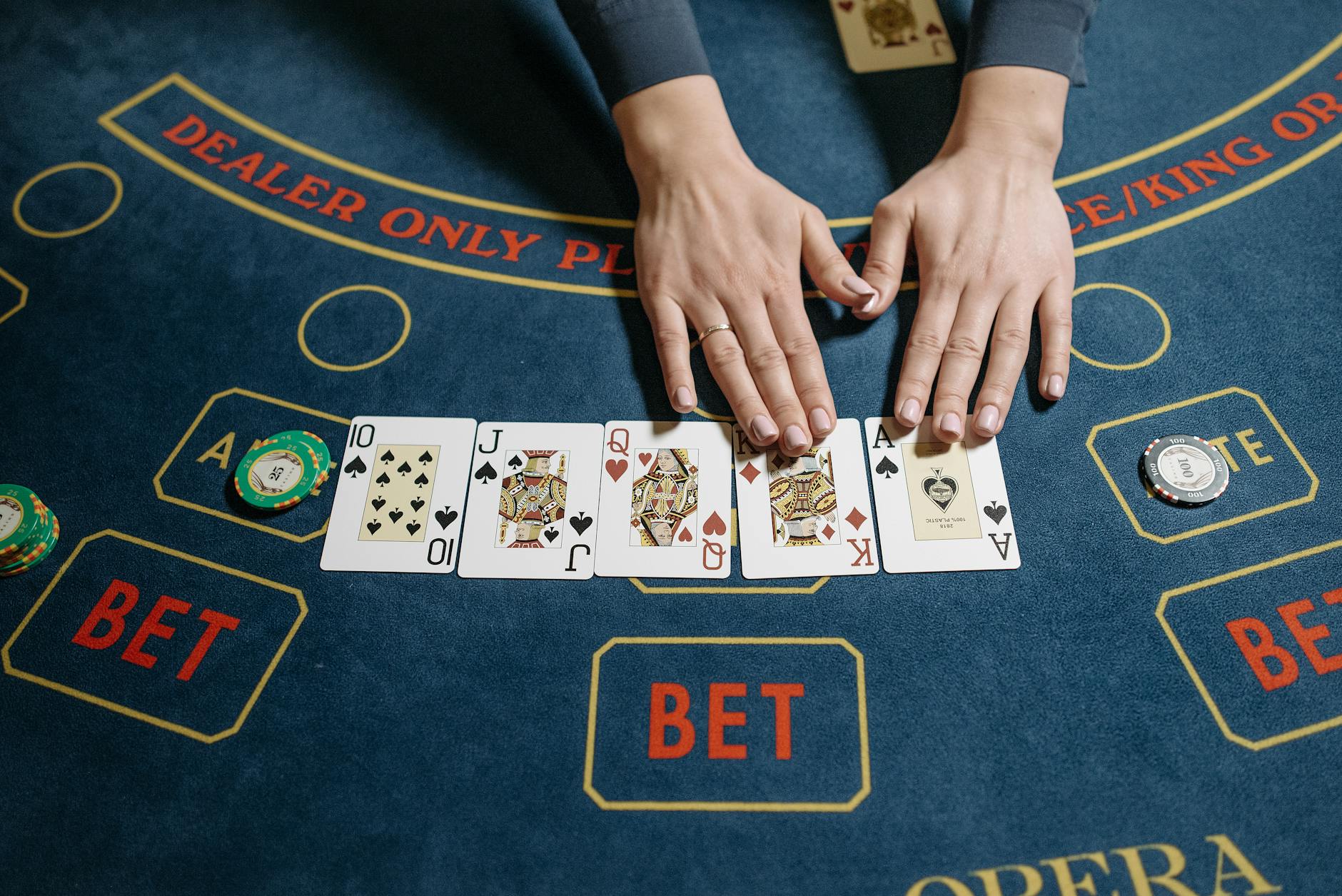
Photo by Pavel Danilyuk on Pexels
Bankroll Mathematics
Poker is a game of expected value — and expected value only matters if you have enough money in your account to stay at the table through the variance.
The standard bankroll rule for Hold'em cash games: keep 20 to 40 buy-ins at your current stake level. For a SGD 10/20 table (SGD 200 buy-in), that means SGD 4,000 to SGD 8,000 set aside as your poker bankroll. For 6-max games, variance is higher — add 10 buy-ins to the ceiling.
This number is not a recommendation; it is a survival threshold. Downswings of 5-10 buy-ins happen to every player, including the ones who post their winning sessions in chat. Without that buffer, a downswing forces you to drop stakes, which changes your game quality and often tilts you into worse decisions.
MBA66 operates a VIP membership program with rebate offerings. For players who run a high volume of hands, the rebate structure effectively supplements the bankroll by returning a percentage of rake — this is standard economics for serious poker players, and it applies whether you're playing SGD 5 stakes or SGD 500 stakes.
How Hold'em Fits Into MBA66
Most Singapore players arrive at MBA66 for the live dealer tables — Baccarat, Sic Bo, Blackjack — or for the slot providers (Pragmatic Play, JILI, Nextspin, Fa Chai, Spade Gaming). Poker is a secondary product on most platforms in this market, and MBA66 is no exception. But that doesn't mean it doesn't belong there.
The question I get most often is this: hold mba66 fits into the broader experience for a poker player? The answer is integration. A platform that handles live dealer payments, slot deposits, and withdrawal requests with the same cashier is a platform where your bankroll management system works across every vertical. When you understand poker expected value, you apply the same logic to wagering requirements on casino bonuses — which games contribute at what percentage, whether a 10x rollover on a SGD 100 bonus is achievable in your normal play patterns.
MBA66's welcome bonuses carry wagering (turnover) requirements. The following bets do not count toward those requirements: opposite bets in Baccarat or Sic Bo (Banker + Player, Big + Small), roulette bets covering more than 30 numbers, paired opposites such as red/black or odd/even, and fishing games on certain slot platforms. Poker does not count toward bonus rollover either — which is standard across the industry because poker is player-versus-player, not player-versus-house. None of this makes poker less worthwhile; it simply means you clear bonuses through your slot and live dealer play while treating your poker sessions as a separate bankroll line.
Moving Real Money: Payment Rails for SGD Players
The casino real money framework at MBA66 works in three stages: deposit, gameplay, and withdrawal. For Singapore players, the payment infrastructure runs on SGD through local online banking. The platform supports deposits and withdrawals via direct bank transfer, which is the dominant rail for SGD transactions in the Singapore market.
For any deposit, keep your bank receipt and transaction reference number. These serve as your primary evidence if a credit is delayed. If funds don't appear within the expected window, contact MBA66's 24/7 Live Chat with your reference number ready.
Withdrawal processing is based on online banking availability. Standard amounts are prioritised; larger amounts may require additional verification. The reasons a withdrawal can be rejected align with the same rules that govern your account: mismatched registration details, unmet wagering requirements, or suspected bonus abuse. If your withdrawal is declined, the support team can explain the specific reason.
One important note on the casino real money distinction: poker winnings are withdrawable immediately. Because poker is player-versus-player and there is no house edge per hand, your balance from poker play is not subject to the same game-eligibility restrictions as bonus balance. You can move money in and out of the poker room through the same cashier used for slots and live dealer — no separate account, no different process.
Photo by cottonbro studio on Pexels
FAQ: Hold'em at MBA66 for Singapore Players
Does MBA66 offer poker, and is it worth playing if I'm mainly here for live dealer games?
Yes. Poker is available within the MBA66 platform. It complements live dealer play rather than competing with it. Because poker is player-versus-player, when you hold a strong hand you are extracting value from other players at the table — not competing against a house edge. This changes the expected value math in ways that experienced casino players find intellectually satisfying. The live dealer poker tables are real-time with professional dealers, mirroring the Evolution-powered studio quality of the baccarat and sic bo floors.
How does the welcome bonus work if I also want to play poker?
MBA66's welcome bonus carries a wagering requirement. Poker does not count toward wagering turnover because it is a player-versus-player game. This means you clear your bonus rollover through slots and live dealer play while treating poker as a separate bankroll line. The key is to plan your bonus clearance separately from your poker sessions — play your slots or live dealer games toward the rollover, and keep your poker balance distinct.
Are the games fair? What licensing applies?
MBA66 operates under permits from the Isle of Man and Kahnawake, Canada. Both jurisdictions require certified RNG software for games with random outcomes. In poker, the fairness question is different: you are playing against other players in real-time, and the live dealer format means no software shuffling — real cards, real dealer, observable by the support team through logged footage if a dispute arises.
How quickly can I withdraw my poker winnings?
Poker winnings are immediately accessible in your withdrawable balance — there is no house edge to clear per hand. Withdrawal processing runs through the same SGD online banking rails as your slot and live dealer withdrawals. Standard amounts are processed with priority; VIP members may access priority withdrawal channels. Keep your bank receipts for every deposit and withdrawal as supporting documentation.
For step-by-step help with account setup, deposit methods, or withdrawal questions, MBA66's 24/7 support team is available via Live Chat in Chinese and English, and you can scan the QR code on the Contact page to reach the official channels directly.